



Gravitational lens shows a galaxy just 800 million years post-Big Bang
arstechnica.com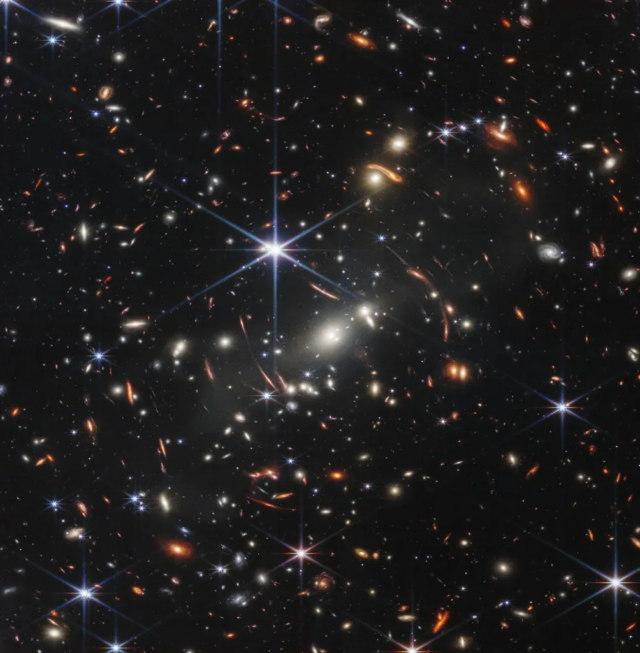
For decades, astronomers looking through telescopes like Hubble have been trying to catch a glimpse of the ancient epoch when the Universe’s first generation of stars ignited. But the small galaxies that were the building blocks of the cosmos we know today were too faint to spot, even by the most powerful instruments. Now it seems astronomers finally have two things on their side: the Webb Space Telescope and a bit of luck.
In a recent paper in Nature, a team of scientists led by Kimihiko Nakajima, an astronomer at the Kanazawa University, Japan, used the James Webb Space Telescope to observe an ultra-faint galaxy called LAP1-B as it existed roughly 800 million years after the Big Bang. It’s the most chemically primitive galaxy we’ve ever seen.
The magnifying glass
The LAP1-B is 13 billion light-years away from Earth. To observe an object that faint and distant ...
Copyright of this story solely belongs to arstechnica.com . To see the full text click HERE