



Tiny, long-armed dinosaur leads to rethink of dinosaur miniaturization
arstechnica.com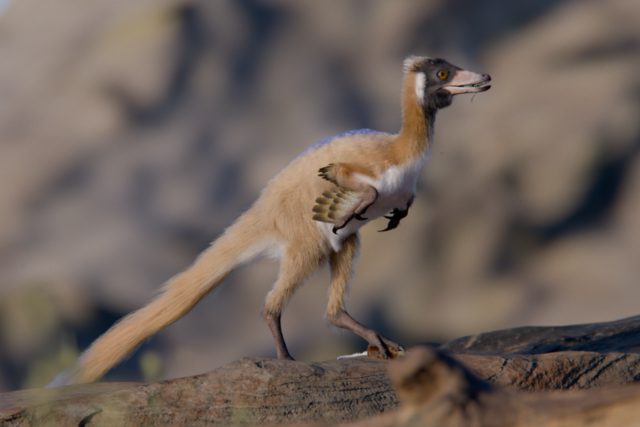
Alvarezsaurids were mostly small-bodied theropods that paleontologists originally misinterpreted as early flightless birds, only to later recognize them as an ant-eating lineage of non-avian dinosaurs. For years, we suspected that Alvarezsaurids underwent a rare process of evolutionary miniaturization directly coupled to a diet of social insects like ants and termites. It was a tidy hypothesis: They got smaller to become more efficient at catching ants.
Now, a recently discovered fossil of one of the smallest alvarezsaurids ever found suggests that the evolution of miniature dinosaurs likely wasn’t as neat and linear as we thought. This new species, called Alnashetri cerropoliciensis, probably did not feed on ants at all. “It was a pursuit predator actively hunting insects and small mammals,” said Peter Makovicky, a paleontologist at the University of Minnesota.
The oddball
Alverezsaurids, found mostly in the Late Cretaceous rocks of Asia and South America, had short forelimbs tipped with ...
Copyright of this story solely belongs to arstechnica.com . To see the full text click HERE